Columbus, GA · Residential concrete
On the Fall Line, good concrete starts with the ground
Columbus sits where hilly red clay country meets the sandy coastal plain, and that seam runs right through the neighborhoods on both sides of the Chattahoochee. Most of the sunken driveways, tilted patios and broken slab corners around here were not caused by bad concrete. Clay that moves with the seasons, sand that washes out in summer storms, and roof water with nowhere to go did the damage. Riverwalk Concrete puts homeowners in touch with a residential concrete contractor. Before pricing anything, that contractor studies the soil, the grade and the runoff on the lot, because those decide more about a slab's future than the mix in the truck.
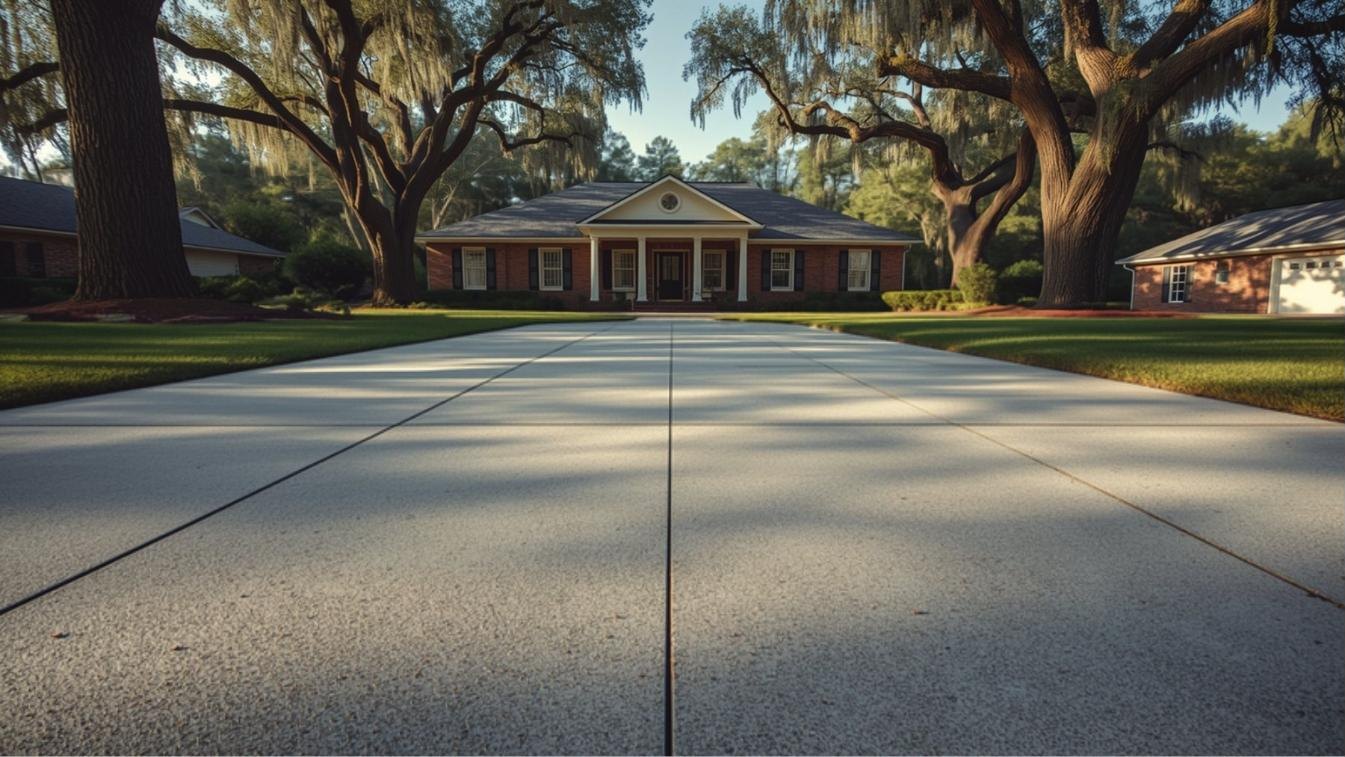
Two kinds of ground in one metro
The river tumbles over a band of hard rock as it passes downtown, and that band, the Fall Line, is also a soil boundary. Upstream and to the north, through north Columbus and into Harris County, the land is Piedmont: rolling hills of dense clay weathered from old crystalline rock. Downstream and to the south, including much of Phenix City and Russell County, the ground turns into the sandier soils of the coastal plain. Between the two, and wherever a subdivision was graded, you can find a mix of both along with plenty of fill.
A concrete slab is a rigid plate. It handles weight well as long as the ground supports it evenly, and it cracks when support changes from one spot to another. Clay and sand break that even support in different ways. Clay swells when it soaks up a long run of rain and shrinks when a dry spell pulls the moisture back out, so the edges of a driveway or patio can end up resting on ground that is higher, lower or softer than the middle. Sand does not swell, but concentrated water carries it off, so a downspout or a stream of runoff along an edge can hollow out a pocket under the concrete a little at a time.
Fill is the third player. When a house is built, soil is dug out for the foundation and later pushed back, and lots are often leveled by moving dirt from high spots into low ones. Unless that loose soil was compacted in thin layers, it keeps settling for years. That is why the front stoop, the first panel of the driveway and the patio along the back wall are so often the pieces that sink first.
Heat, humidity and summer downpours
The Chattahoochee Valley has long, hot, humid summers and mild winters. Freezing nights happen, but hard freezes are occasional rather than constant, so the flaking and pitting caused by repeated freeze-thaw cycles and road salt farther north is a smaller concern here. The weather challenges for concrete in this area come mostly from heat and water.
Heat affects the pour itself. On a bright July afternoon, fresh concrete can lose moisture from its top layer faster than the cement can use it, leaving a weaker surface that dusts, wears or flakes later. Contractors work around this by pouring at dawn, wetting down the stone bed so it does not draw water from the mix, and then shielding the finished surface under a spray-on curing membrane or wet coverings for the first days.
Water shapes what happens afterward. Warm-season thunderstorms often unload heavy rain within minutes, and the remnants of tropical systems sometimes soak the ground for days. All of that water lands on roofs, driveways and patios and has to go somewhere. When it runs toward the house, pools on a slab, or streams along an edge, it softens clay, washes away sand and undermines concrete. A good plan decides where the water will go before anyone decides where the forms will go.
Humidity adds a cosmetic layer. Shaded concrete that stays damp grows mildew and algae, decorative sealers can cloud when moisture is trapped beneath them, and pollen and tree stains settle into textured finishes each spring. None of it is structural, but it influences which finish makes sense in a given spot.
The steps that decide whether a slab lasts
A slab poured with care and one poured in a hurry look alike for the first season. Their paths split later, and the reasons are mostly buried under the surface where nobody can inspect them after curing. That is exactly why these steps deserve questions before the job starts.
Preparing the ground
Topsoil, roots and anything organic should be stripped away, soft spots dug out and replaced, and the subgrade compacted. Then a layer of crushed stone goes down and is compacted with a plate or roller. That stone layer spreads loads, gives the slab a uniform bed and lets water move instead of soaking straight into clay. On any soil in this area, it is one of the most important parts of the job.
Thickness and reinforcement
Driveways, patios and walks are commonly poured about four inches thick, with thicker sections where heavy pickups, campers, boats or equipment will park. Wire mesh, rebar or fibers help hold cracked pieces together and level, but they do not prevent cracking, and steel only helps when it sits within the slab instead of on the ground beneath it.
Joints
Concrete shrinks as it cures and will crack somewhere. Control joints, tooled or saw-cut into the surface, give those cracks a straight, planned place to form. A common guideline keeps them within two or three feet of each other for every inch of slab depth. Isolation joints separate a new slab from the house, steps or older concrete so each can move on its own.
Slope and curing
Every exterior slab should shed water away from the house and off its surface. Then the new concrete needs to be protected from drying out too fast, especially in summer heat, so it reaches the strength its mix was designed for.
Request an estimate visit
Share the address and a line about what you need, whether that is a fresh pour, a replacement, or a slab that is cracking or dropping. You will hear back to arrange a visit.
Talk through your project
A couple of wide photos, one from the street and one from the house, show the contractor how the lot slopes and drains before anyone arrives.
The residential concrete work covered here
Most home projects fall into a few groups. Plenty of jobs overlap: a driveway replacement frequently brings a new front walk along with it, and a back patio often needs a short run of steps from the porch or deck. Stamping, color and exposed aggregate can dress up nearly any of them, in exchange for more upkeep. Repair and replacement form a group of their own, because the first job there is figuring out why the old concrete failed.
Concrete Driveways
Driveways built for clay or sand, from new pours to full tear-out and replacement.
Concrete Patios
Backyard slabs pitched to move storm water away from the back wall.
Stamped & Decorative Concrete
Pattern, color and exposed aggregate, and the sealer upkeep each one needs.
Walkways & Steps
Front walks, paths, stoops and steps with even risers and good grip.
Garage, Shed & RV Slabs
Pads for sheds, garages, campers and boats, sized to the real load.
Concrete Repair & Replacement
Reading cracks and settling, and choosing between repair and a new slab.
Before you ask for an estimate
A little preparation makes the first conversation faster and the site visit more useful. Rough answers are fine, and nothing here is required.
- The property address, and whether an HOA reviews exterior changes in your neighborhood.
- What you want poured or fixed, and roughly how big it is. Pacing it off is close enough.
- What will use it, from family cars and a heavy pickup to a camper, a boat trailer or just a table and chairs.
- Anything that has to be broken up and removed first, such as old concrete, pavers, asphalt or gravel.
- Where rain goes today, including downspouts and any spot that stays wet after a storm.
- Which finish appeals to you: a plain broom texture, a stamped pattern, color or exposed aggregate.
- The path a loaded mixer would take to the work area, plus the location of any septic tank or buried lines.
If the work touches a public street, such as a new driveway apron, ask the city or county office for your address what approval is needed. Columbus, Phenix City and the surrounding counties each handle this in their own way, and many HOAs have separate rules.
How a project usually moves forward
The first step after a request is a trip to the property, and that trip is what turns a rough idea into a defined job. On site, the contractor probes the soil, reads the grade, traces where water runs, studies how any existing slab failed, and works out a route for the mixer. A job that looks simple from a photo can turn out to need drainage work or extra base once someone is standing in the yard.
A written estimate follows. A useful one is specific: size, depth, the stone base and its compaction, steel or fiber, where joints will fall, finish, haul-off of old material, and the planned drainage. When comparing estimates, line them up on those items rather than on the bottom line alone, because very different totals usually mean very different jobs.
Once you agree to move forward, the forecast sets the calendar. Summer work often starts at first light, and a thunderstorm in the forecast or a rare cold snap can shift the date. Afterward, stay off the concrete for the period the contractor recommends and keep vehicles off it longer.
Communities on both sides of the river
Requests come mainly from three counties: Muscogee, which is Columbus itself; Harris to the north; and Russell across the river in Alabama. Because ground and grade can shift within a single subdivision, what the contractor sees in your yard counts for far more than your mailing address.
Columbus concrete questions, answered plainly
What usually causes concrete to crack around Columbus?
Most early cracking comes from the ground and the water rather than the concrete. North of the city, clay soils swell and shrink with the seasons; to the south, sandy ground erodes from beneath slab edges wherever storm water is funneled. Loose fill near foundations keeps settling, and missing or late control joints leave shrinkage to crack wherever it likes. The pattern of the cracks tells a contractor which cause is at work.
When is the best time of year to pour concrete here?
Spring and fall are the easiest seasons, with moderate temperatures and less intense sun. Summer pours are very common but are usually scheduled for early morning, with wet curing or a curing compound to keep the top from drying out in the heat. Winters are mild, yet occasional freezing nights mean fresh concrete may need protection or a short delay. Heavy afternoon storms can also move a pour date, so expect some flexibility in the schedule.
Is it better to lift a sunken slab or replace it?
Lifting with injected foam or grout works well when the slab is still largely in one piece and the ground beneath it has stopped moving. It makes little sense for a slab that has shattered into several chunks, has a flaking surface, or rests on sand that storms are still carrying off. The deciding question is why the slab sank. If that cause can be fixed and the concrete is sound, lifting may be enough.
How soon can I use a new driveway or patio?
Walking on new concrete is usually fine after a day or two, and cars can typically use a driveway after about a week. Concrete keeps gaining strength for weeks, so heavy trucks, trailers and campers should wait longer. Hot weather speeds early curing while cool weather slows it. The contractor should give you dates for your particular pour, and it helps to keep sprinklers, pets and delivery trucks away until then.
Does exterior concrete need to be sealed in this climate?
Plain broom-finished concrete does not strictly need sealing, but a sealer helps it resist stains, water and the mildew that grows in humid shade. Stamped and colored concrete benefits much more, since sealing protects color from strong sun and keeps the surface looking fresh. Ask the contractor which type of sealer suits your finish, when it can be applied after the pour, and how often to reapply it.
Do I need a permit or HOA approval for concrete work?
That depends on the address and the project. Work that ties into a public street, changes drainage, adds a building or changes the look of a home in a planned neighborhood is most likely to need approval. Columbus, Phenix City and the surrounding counties each have their own offices and rules, and many HOAs review exterior changes. Check with the city or county and with your HOA before work is scheduled.
Can concrete be poured over my old driveway or patio?
Pouring new concrete over old is sometimes suggested, but it rarely solves the problem that damaged the original slab. If the old concrete cracked or sank because of poor drainage, washed-out sand or settling fill, the new layer will follow the same movement. The extra height can also cause trouble at doors, garage thresholds and the street. Removing the old slab lets the ground be inspected and corrected first.
Talk through your project
Include the address, the work you have in mind and a few pictures. Close-ups of cracks, dropped corners and spots where rain stands are the most useful.